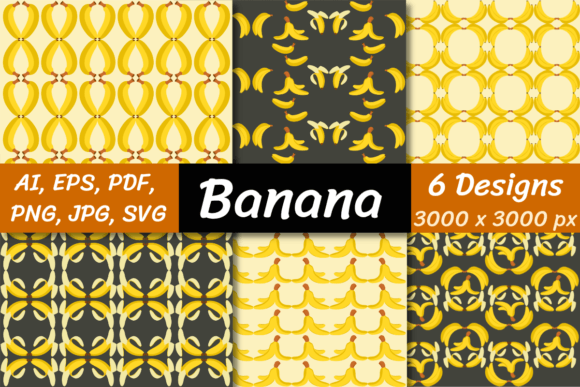
Banana Graphics for Creative Patterns
A Playful Pattern with Practical Potential
At first glance, the Banana pattern feels like a breath of fresh air in the world of design assets. It brings a sense of whimsy and warmth that immediately sets it apart from more traditional or formal graphic elements. The playful use of banana motifs creates a visual language that’s both engaging and approachable. This makes it an ideal candidate for creative projects that lean into a fun, organic, or handmade aesthetic.
The overall mood is light and inviting, with a style that suggests casual elegance. It doesn’t scream for attention but rather invites the viewer to linger and explore. This kind of subtle charm can be especially useful in branding for small businesses, boutique product lines, or seasonal campaigns that aim to feel personal and relatable.
Where Banana Fits in Real Design Projects
Banana patterns are incredibly versatile when it comes to real-world applications. They work beautifully in large layout areas such as hero graphics, packaging design, or website headers where they can take center stage without overwhelming the content. For example, if I were designing a brand identity for a handmade snack company, this pattern could be used on product labels, wrapping paper, or even as part of a logo concept to reinforce a friendly and natural vibe.
In print-on-demand or Etsy product launches, Banana could serve as the base for t-shirt designs, mugs, tote bags, or stickers. Its seamless nature allows for easy repetition across surfaces, which is essential for scalable merchandise. It also works well as a decorative accent in editorial design, social media graphics, or Pinterest pins where it adds a touch of personality without competing with the main message.
For digital sellers or marketers, Banana can be integrated into Canva templates, Cricut projects, or printable wall art. It’s particularly effective in supporting brand elements for small business owners who want to create a cohesive visual identity that stands out in a crowded marketplace.
Design Considerations and Limitations
While Banana is a great asset, it's important to consider where it might not be the best fit. In small sizes or crowded layouts, the detail in the pattern may become lost or distracting. Similarly, using it on complex backgrounds or in low-contrast designs could compromise readability and visual hierarchy. For professional corporate materials or minimalist branding, a subtler or cleaner pattern would likely be more appropriate.
Designers should also test Banana in black and white to ensure it maintains its appeal without color. Checking contrast on both light and dark backgrounds will help determine how well it integrates into different design contexts. Previewing it at various sizes—especially when used in print or on screens—can reveal any potential issues with clarity or scalability.
Practical Designer Notes for Commercial Use
If considering Banana for a client project, there are several practical steps to take before finalizing its use. First, confirm that the asset includes a commercial license, as this is crucial for professional design work. Review the included file formats—such as SVG, PNG transparent, JPEG, and EPS—to ensure compatibility with your workflow and output needs.
Inspect the PNG transparency if included, as this can make a big difference in how the pattern interacts with other design elements. If using vector formats like SVG, check for editability so that you can tweak the design as needed. Compare Banana with different font styles, such as serif, sans serif, script, or display fonts, to ensure it complements the typography effectively.
Finally, place the pattern on real mockups or test prints to see how it performs in physical form. This step is especially important for sublimation design, sticker design, or any project that requires high-quality output.
Conclusion: A Useful Asset for the Right Projects
Banana is a design asset that has clear strengths and limitations. When used thoughtfully, it can enhance the visual mood of a project, support brand consistency, and add emotional appeal. However, it’s not a one-size-fits-all solution and should be evaluated carefully based on the specific needs of the client or project.
For designers working on creative marketplaces, handmade brands, or small business branding, Banana could be a valuable addition to their toolkit. As long as it’s tested, adapted, and used in the right context, it has the potential to elevate the final result and leave a lasting impression on the audience.